Oral appliance vs CPAP: which works, and which you'll actually wear
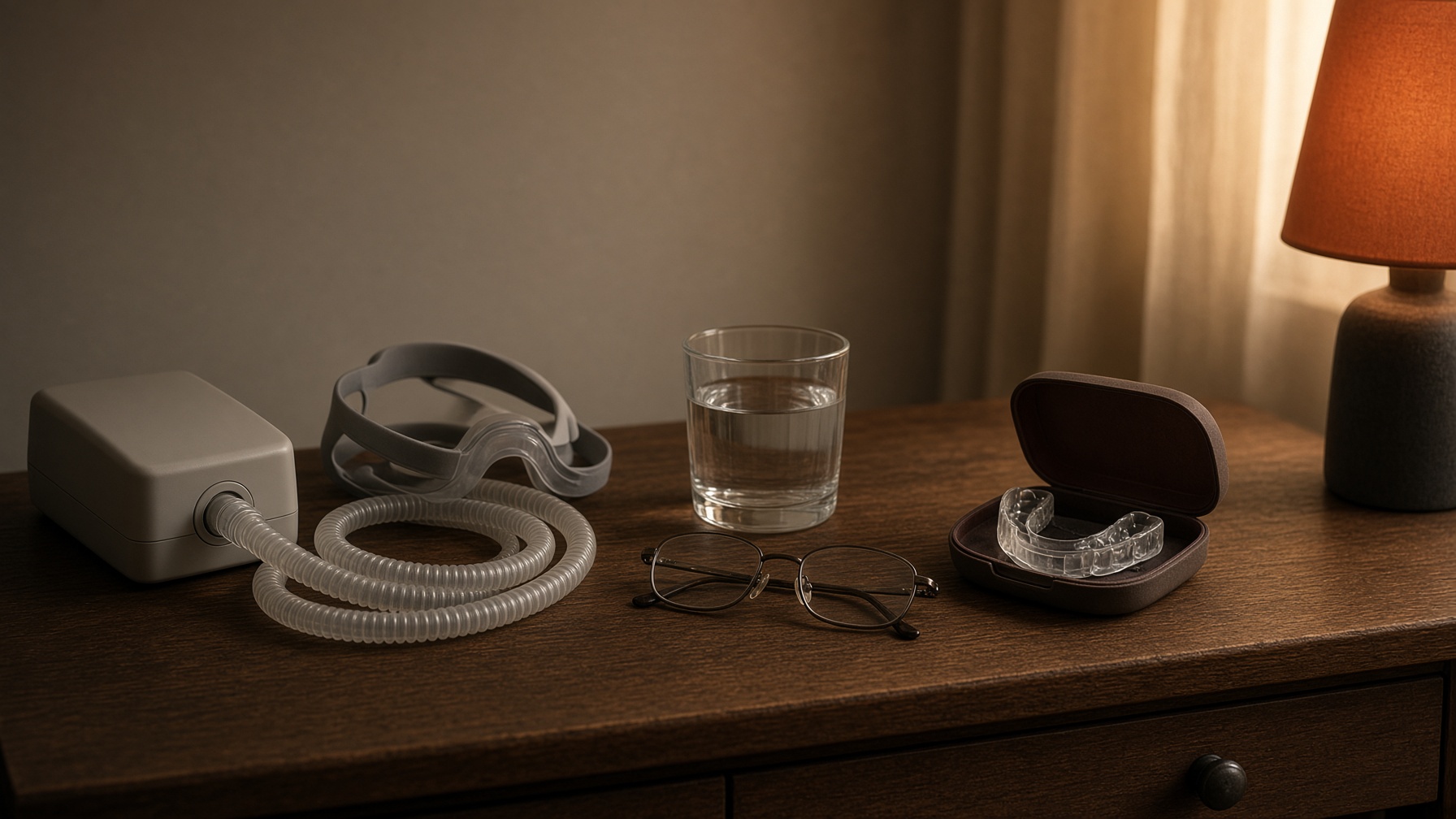
CPAP is the more effective treatment for obstructive sleep apnea when you measure breathing events in a sleep lab. A custom oral appliance is less effective per night on that measure, but people wear it more hours, so real-world results end up closer than the lab numbers suggest. For moderate to severe apnea, CPAP is the standard starting point. For mild apnea, primary snoring, or anyone who has tried CPAP and can't live with it, a custom oral appliance is a recognized alternative.
That's the short answer. The trade-offs underneath it are what you'll want in the room with a sleep physician or a dentist.
How does CPAP work?
A CPAP (continuous positive airway pressure) machine pushes a steady stream of air through a mask while you sleep. The air pressure holds the throat open from the inside, so the airway can't collapse the way it does during an apnea event.
It works the first night. When it's worn, CPAP brings the apnea-hypopnea index (the count of breathing events per hour) down further than any other non-surgical option.
The catch is the word "worn." Estimates of nonadherence, defined as using CPAP fewer than 4 hours a night, run from roughly 30% to 80% of patients depending on the study and the population. Mask leaks, dry mouth, the hose, the noise, a partner who hates it: the reasons people quit are ordinary and human.
How does an oral appliance work?
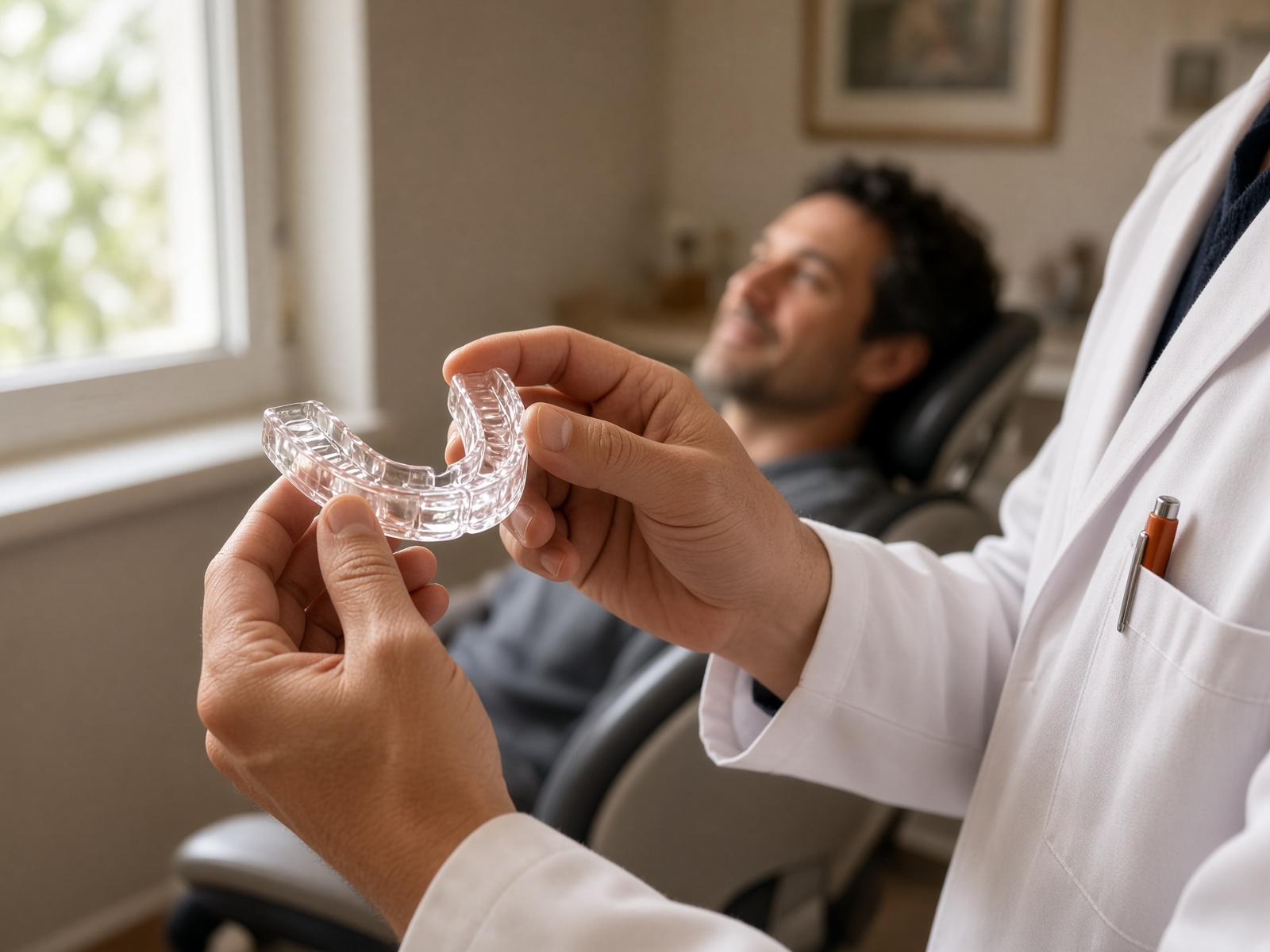
A custom oral appliance (the common type is a mandibular advancement device, or MAD) looks like a two-piece sports mouthguard. A dentist trained in dental sleep medicine fits it to your teeth and adjusts it to hold your lower jaw slightly forward. That pulls the tongue base forward and tightens the tissue behind it, which widens the airway.
No power, no hose, no noise. It fits in a shirt pocket.
The 2015 joint guideline from the American Academy of Sleep Medicine and the American Academy of Dental Sleep Medicine recommends a custom, titratable appliance over the boil-and-bite kind sold online, and recommends oral appliances rather than no treatment for adults with primary snoring and for adults with apnea who can't tolerate CPAP or prefer an alternative.
Which one is more effective?
Measured by breathing events per hour, CPAP wins. That's consistent across trials.
Measured by how a person's blood pressure, daytime sleepiness, and quality of life change after a month on each, the picture is closer. A 2013 randomized crossover trial published in the American Journal of Respiratory and Critical Care Medicine put patients on CPAP for a month and a custom MAD for a month. CPAP reduced apnea events more. Patients used the appliance about an hour more per night than they used CPAP. Health outcomes after each month were similar.
The plain reading: a treatment you use 6 hours a night can match a stronger treatment you use 4 hours a night. Effectiveness is efficacy multiplied by hours worn.
Which one is more comfortable?
Most people find the appliance easier to live with. It's silent, it travels, and there's nothing on your face.
It isn't free of side effects. Early on, expect jaw soreness, extra saliva or a dry mouth, and teeth that feel odd for a few minutes in the morning. Over years, appliances can shift teeth slightly and change how your bite meets. That's why the guideline calls for ongoing dentist follow-up rather than fit-and-forget.
CPAP side effects are different in kind: mask pressure marks, congestion, bloating from swallowed air, and the noise and tether. Modern machines are quiet and mask designs have improved, and plenty of people adapt fine. Others never do.
What does each cost?
Costs vary by insurer, region, and provider, so treat this as orientation rather than a price list.
CPAP is usually billed as durable medical equipment. In the US, Medicare and many private plans cover it, but coverage often continues only if you meet a usage threshold. Medicare's rule is at least 4 hours a night on 70% of nights during a consecutive 30-day window inside the first 90 days. The machine reports this itself.
A custom oral appliance is a one-time device made by a dentist. For a diagnosed apnea patient it's often covered under medical insurance rather than dental, though preauthorization and a physician's prescription are typically required. A snoring-only appliance is usually out of pocket. Appliances also wear out and need replacement every few years.
Who is each one right for?
CPAP first: moderate to severe apnea, low overnight oxygen levels, or a cardiovascular history where the physician wants the strongest available effect.
Oral appliance first: primary snoring with no apnea, mild apnea, a strong preference for a device with no machine, or a job or lifestyle (travel, shift work, camping) where CPAP won't get packed.
Oral appliance second: anyone who tried CPAP in good faith and stopped. The guideline explicitly covers this case. A treatment you abandon has an efficacy of zero.
Some people combine the two, using an appliance to lower the CPAP pressure they need. Some people need neither and are better served by an ENT, a surgeon, or positional therapy. Which path fits is a decision to make with the right members of the sleep care team, and a dentist can be part of that team.
What should you do before choosing either?
Get a diagnosis. Both devices treat a condition that has to be measured first, usually with a home sleep test or an in-lab study. If you're reading this because a partner says you stop breathing at night, start with the signs of sleep apnea and a conversation with a clinician.
Then think about the honest question underneath the comparison: what will you still be wearing in 6 months?
We build wellness tools at Somnus, and none of them is a treatment. Nightsong listens from the nightstand and shows you snore burden and breathing regularity across your own nights, you vs you, as a general-wellness read. It's not a diagnosis and it doesn't replace a sleep study. It can make the "how did last night go" conversation with your clinician start from a pattern instead of a guess. That's the sensing layer of the Somnus platform, and it's part of a bigger picture on sleep as a wellness foundation.
This article is educational and not medical advice. Talk to a qualified clinician about your situation.
FAQ
Is an oral appliance as effective as CPAP?
Per night of use, no. CPAP reduces breathing events more. But people tend to wear oral appliances more hours, and in a 2013 crossover trial health outcomes after a month on each were similar. For moderate to severe apnea, CPAP remains the standard first choice.
Can I use an oral appliance instead of CPAP?
Often yes for primary snoring or mild apnea, and the AASM/AADSM guideline supports it for people who can't tolerate CPAP. It's a decision for a sleep physician, with a dentist doing the fitting.
Does insurance cover oral appliances for sleep apnea?
Frequently, under medical (not dental) benefits, when there's a diagnosed apnea and a physician's prescription. Snoring-only appliances are usually out of pocket. Check your plan.
What are the side effects of a mandibular advancement device?
Jaw soreness, drooling or dry mouth, and a temporarily odd bite in the morning are common early on. Over years, small tooth movement and bite changes can occur, which is why regular dentist follow-up is recommended.
Do over-the-counter boil-and-bite mouthguards work for snoring?
Sometimes, a little. The 2015 guideline recommends custom, adjustable appliances over non-custom ones, and a dentist can adjust a custom device as you go.
Sources
- Ramar K, et al. Clinical practice guideline for the treatment of obstructive sleep apnea and snoring with oral appliance therapy: an update for 2015. J Clin Sleep Med.
- Phillips CL, et al. Health outcomes of CPAP versus oral appliance treatment for obstructive sleep apnea: a randomized controlled trial. Am J Respir Crit Care Med 2013;187:879-887.
- Annals of Internal Medicine summary: Mandibular advancement device and CPAP did not differ for health outcomes in obstructive sleep apnea.
- Rotenberg BW, et al.; CPAP nonadherence estimates 30% to 80% at the <4 h/night threshold, summarized in: Effectiveness of eHealth interventions in improving treatment adherence for adults with OSA. J Med Internet Res 2020.
- Adherence to positive airway pressure therapy in patients with obstructive sleep apnea (review).
- CMS National Coverage Determination 240.4, CPAP therapy for OSA (initial 12-week coverage period).
- CMS DME MAC Local Coverage Determination L33718, Positive Airway Pressure devices for OSA (adherence defined as at least 4 hours per night on 70% of nights in a consecutive 30-day period during the first 90 days).